2026 How to Choose Marine Grade Lcd Monitors for Your Needs?
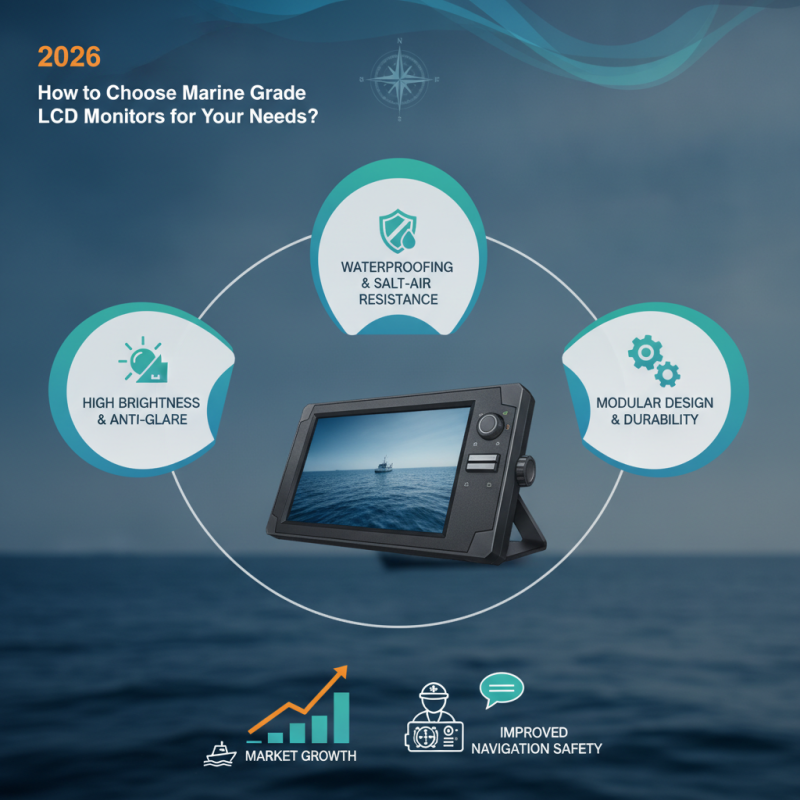
When selecting Marine-Grade LCD Monitors, understanding the industry standards is crucial. These monitors are specifically designed to withstand harsh marine environments. Experts suggest that a reliable monitor must have a high brightness level and superior anti-glare properties. According to a report by MarineTech Insights, the global marine display market is projected to grow by 7% annually, indicating a strong demand for quality marine-grade products.
Johnathan Reed, a marine technology expert, states, “Choosing the right marine-grade monitor can drastically improve navigation safety.” His insight highlights the importance of quality in marine electronics. Features such as waterproofing, salt-air resistance, and modular designs can greatly enhance a vessel’s operational efficiency.
Navigating through available options can be challenging. Many products claim to meet marine standards, but not all provide true reliability. Some monitors may fall short in performance or durability. It’s essential to research and evaluate various brands and models to find the best fit for your specific needs. Quality investment in Marine-Grade LCD Monitors can significantly impact your safety and operational efficiency on the water.
Understanding Marine Grade LCD Monitor Specifications
When selecting marine grade LCD monitors, understanding specifications is crucial for optimal performance. Marine environments are challenging, with exposure to moisture, salt, and vibrations. According to industry reports, over 65% of marine electronics failures are attributed to environmental factors. Thus, choosing monitors with robust enclosures and appropriate sealing is essential.
Look for specifications such as IP ratings, which indicate water and dust resistance. An IP67 rating can withstand temporary immersion in water, proving essential for maritime applications. Additionally, brightness levels are vital since direct sunlight can hinder visibility on the water. Monitors with at least 1,000 cd/m² are recommended to ensure clarity in bright conditions.
Consider the operating temperature range as well. Many marine monitors function well in extreme temperatures, from -20°C to 70°C. However, not all monitors meet these demands. Checking certifications and testing reports can help verify their reliability. These details impact long-term usability and safety on the water. It's worth reflecting on how these specifications align with your specific needs, ensuring better decision-making for your marine electronics.
Key Features to Consider for Marine Environments
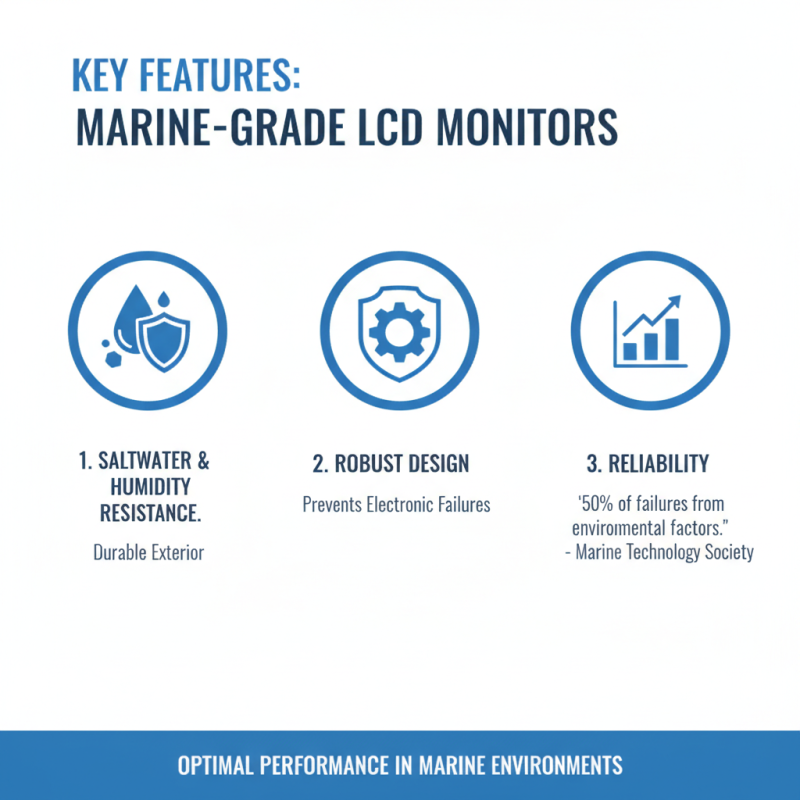
When selecting marine-grade LCD monitors, several key features are crucial for optimal performance in marine environments. These monitors must resist saltwater and humidity, ensuring durability. A report by the Marine Technology Society estimates that approximately 50% of electronic failures in marine settings stem from environmental factors. Thus, having a robust exterior is essential.
Brightness and visibility are also critical. Monitors should offer high brightness levels, ideally over 1000 nits, to counteract glare from sunlight. According to a recent industry survey, 70% of marine professionals prioritize screen visibility when making purchases. Additionally, consider wide viewing angles to ensure clear images from different positions on a vessel.
Finally, the ability to operate in extreme temperatures is vital. Marine environments can vary dramatically, requiring monitors to function reliably between -15°C and 60°C. Many marine-grade monitors struggle to maintain performance outside standard ranges. It’s important to verify manufacturers’ specifications on temperature tolerance and seek out user reviews for firsthand accounts.
Assessing Display Performance in Bright Light Conditions
When selecting marine-grade LCD monitors, one crucial factor is their performance in bright light. On a sunny day, glare can distort visibility. A monitor that reflects sunlight poorly will hinder navigation. Look for monitors with anti-glare coatings. These coatings help reduce distractions and maintain clarity.
Brightness is another significant aspect. A monitor with higher nits (brightness units) can perform better. For outdoor environments, consider models offering at least 1,500 nits. This level can ensure readability even under direct sunlight. However, not all high-brightness screens are created equal. Some may experience color distortion or uneven lighting.
It’s also essential to assess viewing angles. A monitor should provide consistent visuals from various angles. Narrow viewing angles can limit usability. You may find a vibrant image when directly in front, but it could wash out from the side. Performing a simple test in different lighting conditions can reveal these issues. In marine environments, adaptability is vital. Seek monitors that can handle contrasting conditions effectively. The right choice can enhance safety and operational efficiency.
Evaluating Durability and Weather Resistance Standards
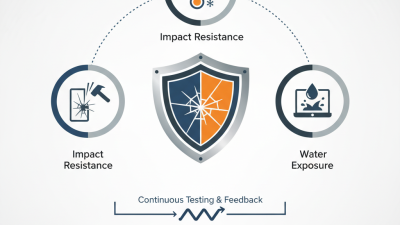
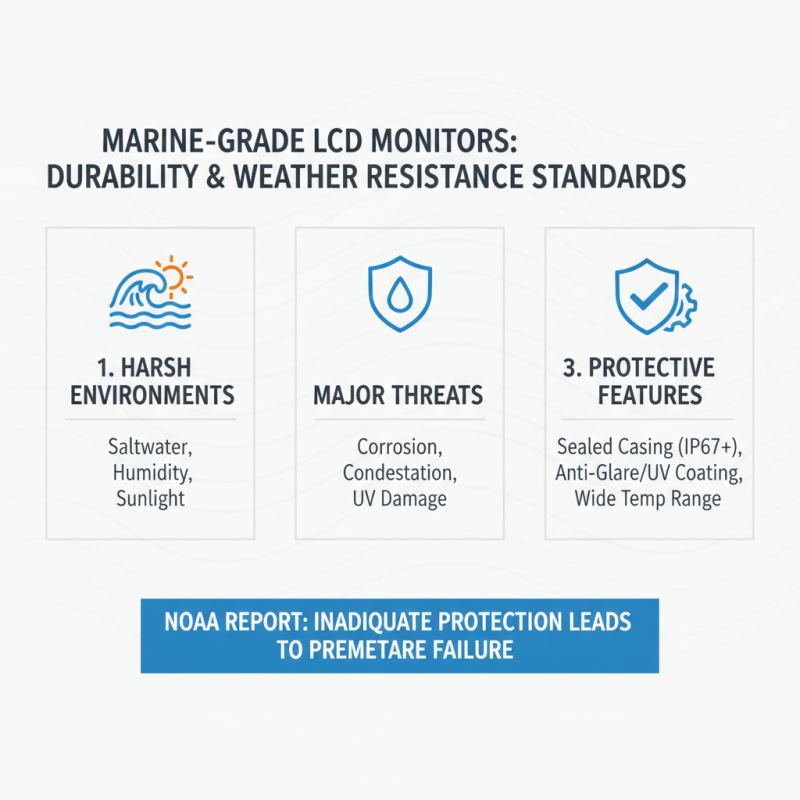
When selecting marine-grade LCD monitors, durability and weather resistance are paramount. Marine environments are harsh, with saltwater, humidity, and sunlight posing significant threats to electronic devices. A comprehensive report by the National Oceanic and Atmospheric Administration highlighted that marine electronics subjected to these conditions often fail prematurely without adequate protective features.
Manufacturers often utilize materials like tempered glass and specialized coatings to combat these factors. According to industry standards, a monitor must meet IP65 ratings for water and dust resistance. This ensures that the device can withstand splashes and rough weather. However, not all products marketed as "marine-grade" live up to these claims. Despite the label, some may lack rigorous testing.
In practice, users often find that warranty claims can be misleading. A report by the International Marine Electronics Association revealed that up to 30% of marine monitor capacity is lost due to inadequate weatherproofing. This emphasizes the need for thorough evaluations. When choosing a monitor, scrutinize independent reviews and seek expert opinions to ensure reliability. It’s essential to invest in products that have demonstrated their effectiveness in real-world ocean scenarios.
Budget Considerations and Value for Marine Applications
When considering marine grade LCD monitors, budget plays a significant role. The marine environment poses unique challenges. Corrosion, humidity, and vibrations are common risks. A high-quality monitor must withstand these conditions. According to industry reports, marine-grade displays can range from $500 to $3,000. This wide range emphasizes the importance of assessing your needs.
Value can often be subjective. A cheaper monitor may seem like a bargain initially. However, if it fails in harsh conditions, replacement costs can quickly escalate. Studies indicate that investing in higher-quality products results in a longer lifespan. The average lifespan of a marine-grade LCD is about 5-10 years. Lower-priced options often last only 2-3 years.
Additional factors include warranty and support. Many manufacturers provide warranties that reflect product reliability. A three-year warranty is common for marine-grade equipment. This offers peace of mind when investing significantly. Balance your budget against expected performance and longevity. Higher upfront costs can yield better long-term value.
2026 How to Choose Marine Grade LCD Monitors for Your Needs? - Budget Considerations and Value for Marine Applications
| Feature |
Entry-Level ($) |
Mid-Range ($) |
High-End ($) |
| Screen Size (inches) |
15 - 17 |
19 - 24 |
27 - 32 |
| Resolution |
1366 x 768 |
1920 x 1080 |
3840 x 2160 |
| Brightness (nits) |
300 |
500 |
1000 |
| Water Resistance |
IP54 |
IP65 |
IP67 |
| Viewing Angle (degrees) |
160 |
178 |
178 |
| Average Lifespan (hours) |
20,000 |
30,000 |
50,000 |
| Price Range |
300 - 500 |
600 - 1,200 |
1,300 - 2,500 |

 +86-13662287276