Top Wide Viewing Angle Displays for Optimal Visual Experience?
Wide Viewing Angle Displays have become essential in today’s visual technology landscape. According to Dr. Emily Tran, an expert in display technologies, “The real challenge is creating a display that looks great from every angle.” This statement underscores the importance of optimizing visual experiences for all viewers.
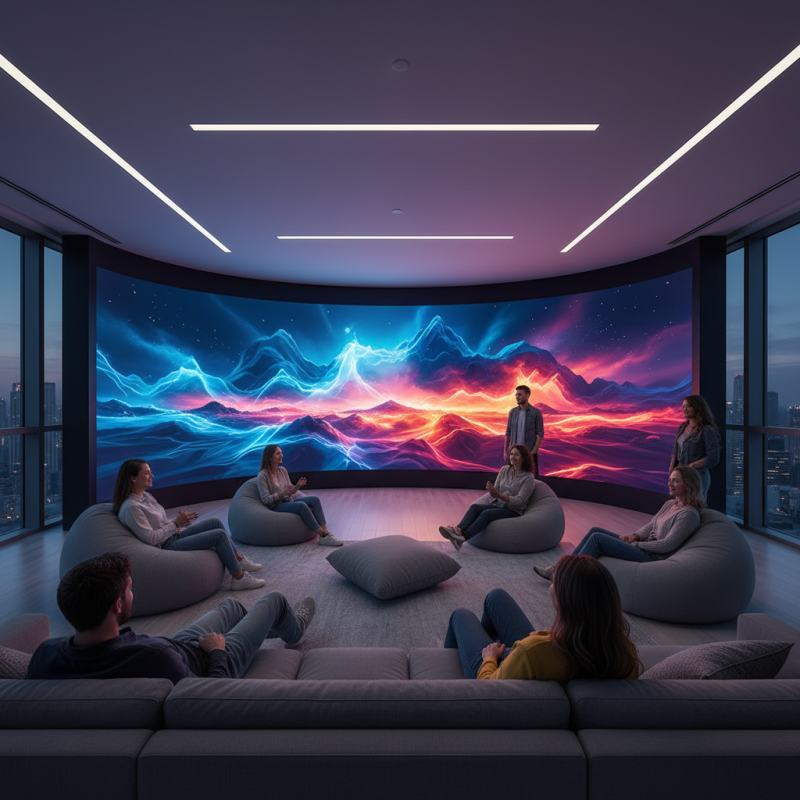
Having a wide viewing angle means that colors and contrast remain consistent, regardless of the viewer's position. This feature enhances group viewing experiences, whether in homes or public spaces. Yet, achieving this can be complex. Many manufacturers struggle to balance performance with costs. Additionally, not all wide viewing angle displays are created equal; consumer awareness is crucial.
Investing in high-quality displays allows users to enjoy vibrant pictures, even when viewed from extreme angles. Ideally, these displays would cater to diverse settings and user needs. However, with continual advancements, the industry must reflect on its methods and outcomes. The perfect balance between quality and affordability remains an ongoing challenge.
Top Wide Viewing Angle Display Technologies Explained
Wide viewing angle displays offer an enhanced visual experience, making them essential for various applications. Technologies like IPS (In-Plane Switching) and VA (Vertical Alignment) are popular choices. IPS displays are known for their accurate color reproduction and wide angles, allowing multiple viewers to enjoy the content without distortion. VA displays, on the other hand, excel in producing deep blacks and high contrast ratios but may fall short in color performance when viewed off-axis.
Choosing the right technology depends on your needs. If color accuracy is crucial, IPS is often the go-to. Users seeking deeper blacks may prefer VA. However, both technologies require consideration of viewing distance and lighting conditions in your environment.
Tip: Always test displays in-store. Real-world viewing can differ from specifications. A display that looks good on paper might not meet your expectations in practice.
Lighting can affect visual performance as well. A bright room might wash out colors on some screens. Hence, adjusting your display settings and controlling ambient light can significantly improve the viewing experience.
Tip: Be mindful of your space. Ambient light can change how colors appear. Setting your display in a controlled environment enhances overall enjoyment.
Benefits of Wide Viewing Angle Displays for Different Use Cases
Wide viewing angle displays have gained popularity for their versatility across various use cases. These screens maintain color accuracy and clarity from different angles, making them ideal for collaborative work environments. In offices, team members can easily share information without shifting the display or crowding around it. This feature enhances productivity and ensures everyone has a clear view.
Moreover, wide viewing angles are particularly beneficial for creative professionals. Graphic designers and videographers need precise color representation. When they work on projects, especially with clients, a wide viewing angle allows everyone to see the same vibrant colors and details. However, not all displays offer the same level of performance. Users should consider factors like panel technology and calibration to ensure they get the best experience.
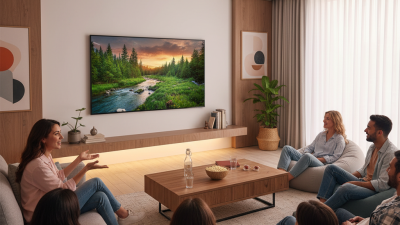
In home settings, these displays enhance family movie nights or gaming sessions. Everyone can enjoy the same immersive experience, regardless of where they sit. Yet, potential buyers should reflect on their specific needs. A wide viewing angle might not always be necessary for casual use. Prioritize personal preferences to choose what's best for you.
Key Features to Look for in Wide Viewing Angle Monitors
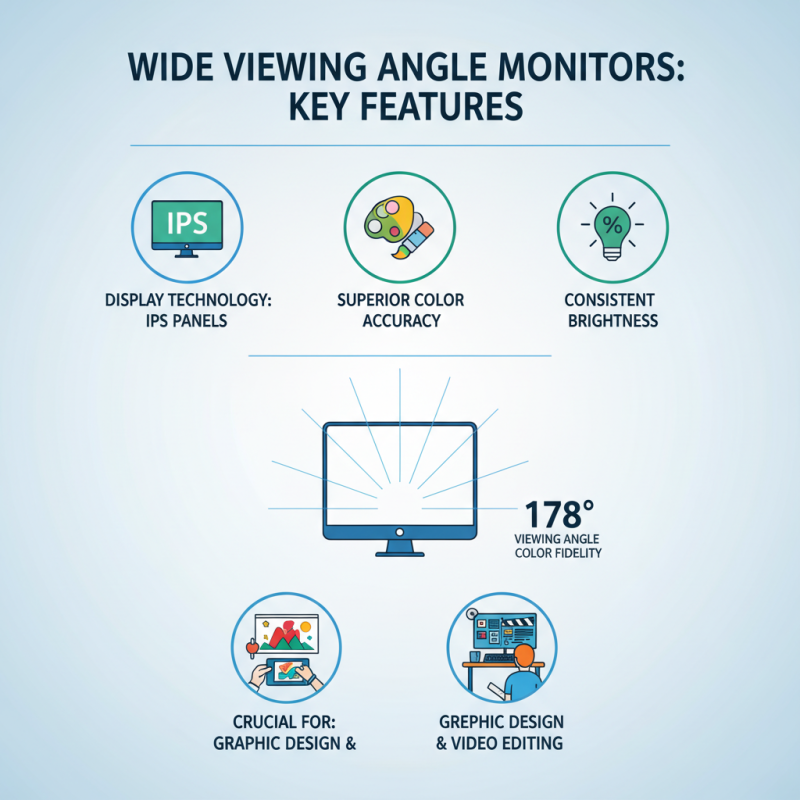
When selecting a wide viewing angle monitor, several key features enhance the visual experience. First, display technology plays an essential role. IPS (In-Plane Switching) panels are favored for their superior color accuracy and consistent brightness across wide angles. Reports indicate that IPS panels maintain over 90% color fidelity at angles up to 178 degrees. This quality is crucial for graphic design and video editing tasks.
Another vital aspect is the display's color gamut. Models that support 100% sRGB or broader ranges, such as Adobe RGB and DCI-P3, deliver vibrant colors. A broader color spectrum enhances visuals, making them more immersive. Additionally, brightness levels impact usability in various lighting conditions. Monitors with brightness ratings of 300 to 400 nits cater well to bright environments.
Consideration must also be given to the monitor's resolution. Higher resolutions, like 4K, offer sharper images and finer details, especially with wide viewing angles. However, users should reflect on their hardware capabilities. Running 4K at high frame rates requires substantial graphics power. This aspect raises questions about whether the investment aligns with practical needs. Balancing features with user requirements ensures the best overall experience.
Comparison of Popular Wide Viewing Angle Display Brands
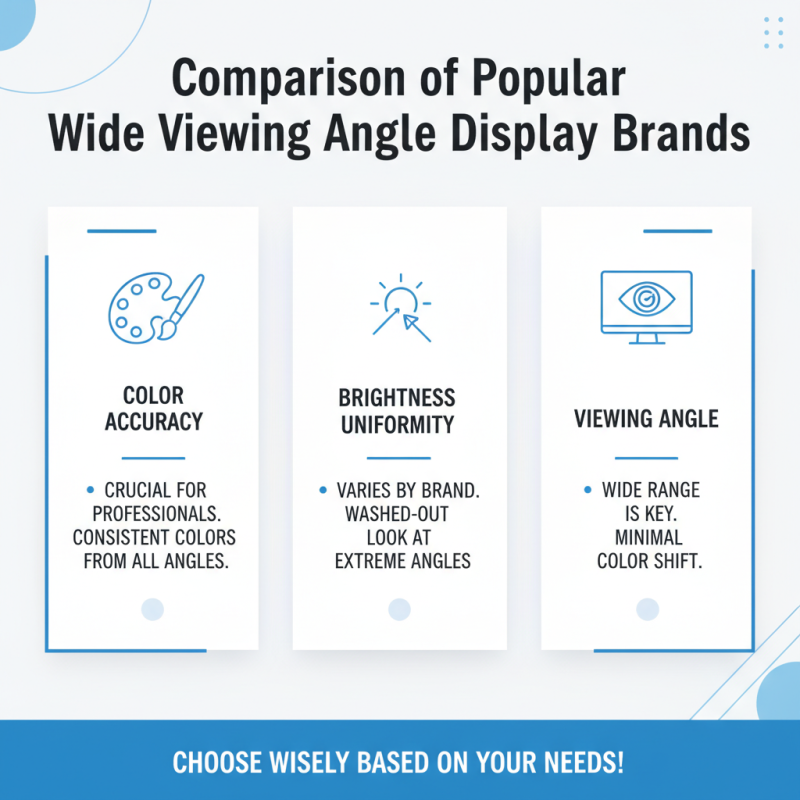
When choosing a wide viewing angle display, key factors are important. Color accuracy is vital for professionals like graphic designers. The ability to see consistent colors from various angles makes a huge difference. Moreover, the brightness levels of a display can vary significantly across different brands. Users should be aware that some displays might appear washed out at extreme angles.
Contrast ratios also play a crucial role. A high contrast ratio offers vivid images and deep blacks, improving the overall experience. It's important to note that some popular displays may struggle in bright environments, causing glare. User feedback indicates that certain brands often provide better anti-glare options. However, not all displays labeled as "wide viewing angle" perform equally well in real-life settings.
Additionally, response time can differ. Quick response times minimize motion blur, especially in fast-paced content. Some consumers express dissatisfaction with ghosting effects on specific models. This shows that even top brands have room for improvement. Therefore, it's essential to evaluate personal needs against display specifications. Researching user reviews can offer insights into actual performance, which is crucial for making the best choice.
Future Trends in Wide Viewing Angle Display Technology
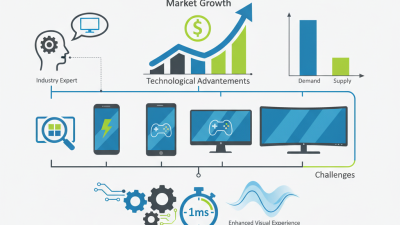
Wide viewing angle display technologies are gaining traction as user preferences evolve. Current trends indicate that consumers seek immersive experiences. A study by Future Market Insights projects a compound annual growth rate (CAGR) of over 8% for these displays through 2030. This is primarily driven by the growing demand in sectors like gaming, education, and remote work.
Advancements in OLED and IPS technologies have significantly enhanced viewing angles. These technologies offer improved color accuracy and contrast, even from sharp angles. The challenges lie in the cost and scalability of production. While high-quality displays are making waves, long-term reliability remains a concern for manufacturers and consumers alike. Trade-offs exist between performance, cost, and durability. Users may notice variations in quality over time, necessitating constant reflection on their choices.
In the realm of widescreens, research from the Display Industry Association suggests that displays with wide viewing angles can boost user engagement by up to 30%. However, the user experience varies based on viewing conditions, such as ambient light. Future developments must address these nuances to ensure consistent quality across diverse environments. The path forward will demand innovation in materials and processes to overcome current limitations.

 +86-13662287276