 +86-13662287276
Leave Your Message
-
CONTACT ISEE
-

-

Choosing China’s best Low-Power Consumption Leds requires more than comparing prices or advertised wattage. A reliable decision begins with the application. Consider the required brightness, color temperature, operating hours, installation space, and local voltage conditions. A warehouse light may need wide, steady illumination, while a garden fixture may prioritize low heat and long battery life. Small details matter.
Experienced buyers usually examine luminous efficacy, driver quality, thermal management, and expected lifetime together. A lamp claiming low energy use may perform poorly if its driver wastes power or its brightness declines quickly. Ask Chinese manufacturers for LM-80 data, test reports, sample units, and clear warranty terms. Check whether the stated performance applies to the complete fixture, not only the LED chip. This distinction can change the purchasing decision.
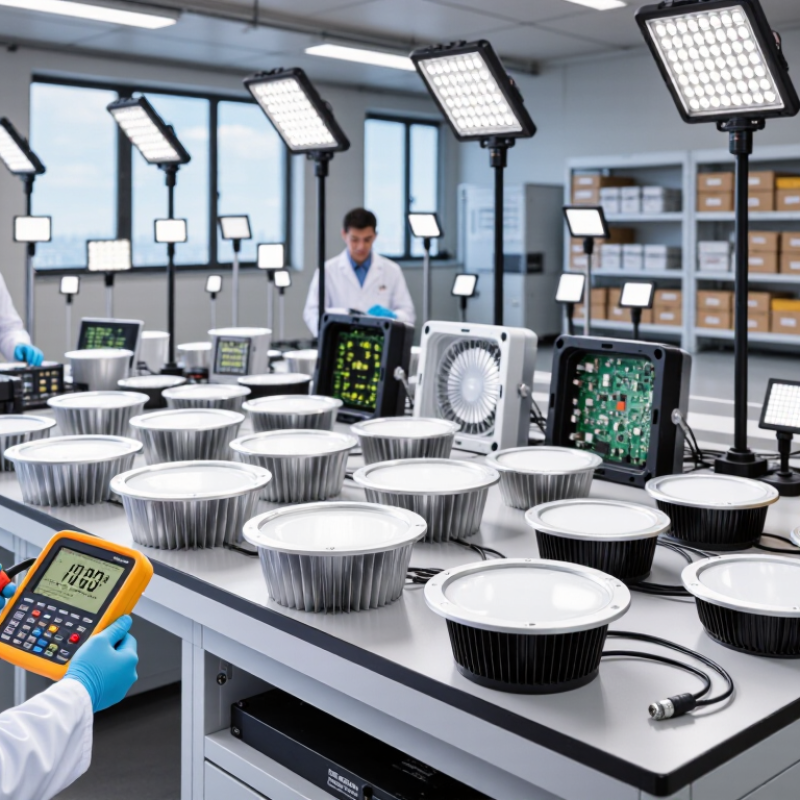
Supplier evaluation also deserves practical attention. Review factory experience, production controls, quality inspection records, and communication during sample testing. Certifications should match the destination market and product category. Independent testing can provide stronger evidence than polished product photos. Still, no single LED is best for every project. That assumption is incomplete. Some specifications may be unclear, and samples may not represent mass production perfectly. Therefore, buyers should test products under real conditions, record power readings, inspect heat after several hours, and compare results with the supplier’s claims. This guide explains how to make that process more accurate, transparent, and cost-effective.
How To Choose China Best Low Power Consumption LEDs?
Understanding Low-Power LED Technology and Energy Efficiency
Low-power LEDs reduce electricity use by operating with efficient chips and carefully controlled current. Their performance depends on more than wattage. Lumen output, beam angle, color quality, and heat management also matter.
A 3-watt LED may replace an older 6-watt lamp in a hallway. However, the comparison only works when both products deliver similar lumens. Check lumens per watt, not marketing language. A reliable specification sheet should show input voltage, rated life, operating temperature, power factor, and flicker performance.
The driver deserves close attention. Poor drivers can waste energy, create visible flicker, or fail during voltage changes. Look for stable current control and appropriate thermal protection. Aluminum housing can help move heat away from the LED, especially inside enclosed fixtures. Heat is the quiet enemy.
When evaluating Chinese suppliers, request production samples and independent test reports. Verify measurements with a power meter and light meter. Check color consistency across several units, not just one sample. Certifications should match the destination market and product category. Ask how lifetime data was tested, because “50,000 hours” is not always a real-world result.
My first comparison once focused only on wattage. It missed driver losses and dimming behavior. A better review includes installation conditions, daily operating hours, and maintenance access. Sometimes a slightly higher-rated LED saves more energy because it produces useful light with less replacement.
| LED Package Type | Typical Rated Power | Typical Drive Current | Typical Forward Voltage | Typical Luminous Efficacy | Common Applications | Energy-Efficiency Considerations | Selection Recommendation |
|---|---|---|---|---|---|---|---|
| SMD 2835 | 0.1–0.5 W per LED | 20–150 mA | Approximately 2.8–3.2 V for white LEDs | 100–180 lm/W, depending on current, phosphor, color temperature, and thermal conditions | LED bulbs, linear light bars, panels, cabinet lighting, and compact luminaires | Large light-emitting area and efficient thermal path can provide good output at moderate current | A strong general-purpose option for low-power lighting designs |
| SMD 3528 | 0.05–0.2 W per LED | 10–60 mA | Approximately 2.8–3.2 V for white LEDs | 80–140 lm/W in typical low-current applications | Indicator lighting, low-brightness strips, displays, and decorative illumination | Low operating current reduces power consumption, but light output per LED is limited | Suitable when low heat, low power, and uniform decorative light are more important than high brightness |
| SMD 3014 | 0.1–0.2 W per LED | 20–60 mA | Approximately 2.8–3.2 V for white LEDs | 100–160 lm/W in well-designed systems | Edge-lit panels, backlighting, signage, and slim linear fixtures | Narrow package geometry supports dense, uniform placement and efficient optical design | Useful for thin products requiring even light distribution with moderate power consumption |
| SMD 5050 | 0.15–0.3 W per LED package; RGB versions may contain three LED chips | 20–60 mA per chip, depending on configuration | Approximately 2.8–3.2 V per white or colored chip | 70–130 lm/W for white versions; RGB efficiency varies significantly by color and control current | Color-changing strips, decorative lighting, signs, and entertainment lighting | Multiple chips increase flexibility but can raise total power consumption and thermal load | Choose only when color mixing or higher package output is required; use current control carefully |
| SMD 5730 | 0.5–1.0 W per LED | 100–300 mA | Approximately 2.8–3.2 V for white LEDs | 100–170 lm/W, depending on operating current and heat dissipation | High-output bulbs, downlights, floodlights, and compact luminaires | Higher current can deliver strong brightness but requires a more capable heat path and driver | Use when more light per LED is needed; it is not always the best choice for ultra-low-power products |
| Low-Power Indicator LED | 0.02–0.1 W per LED | 2–20 mA | Approximately 1.8–3.2 V, depending on LED color | Varies widely; visibility is usually prioritized over lumen output | Control panels, appliances, sensors, status indicators, and electronic equipment | Very low current can extend battery life and minimize heat generation | Best for signaling and visual status indication rather than general illumination |
| Chip-on-Board Low-Current Module | 0.5–3 W per module | 150–900 mA, depending on module design | Approximately 9–36 V, depending on the number of chips in series | 100–180 lm/W for efficient white-light modules | Downlights, spotlights, reading lights, and compact directional fixtures | Uniform light output is possible, but the module requires suitable thermal management and optics | Consider for compact fixtures where consistent light and simple optical integration are important |
| High-CRI Low-Power LED | Usually 0.1–0.5 W per LED | 20–150 mA | Approximately 2.8–3.2 V for white LEDs | Typically 70–130 lm/W at CRI 90 or higher | Retail displays, museums, residential lighting, photography, and hospitality spaces | Higher color quality may reduce efficacy compared with standard CRI 80 products | Select when accurate color appearance is more important than maximum lumens per watt |
| Tunable-White LED System | 0.1–0.5 W per LED channel | 20–150 mA per channel | Approximately 2.8–3.2 V per LED channel | Typically 80–150 lm/W, depending on the active color channels | Smart lighting, offices, healthcare spaces, and human-centric lighting systems | Control electronics and simultaneous operation of multiple channels affect total system efficiency | Evaluate complete system power, not only the LED chip rating |
| Low-Voltage LED Strip Segment | Approximately 4.8–14.4 W per metre, depending on LED density and configuration | Defined by the strip circuit and power supply | Commonly 5 V, 12 V, or 24 V system voltage | Approximately 70–150 lm/W for white strips, depending on construction | Under-cabinet lighting, signage, furniture lighting, and decorative applications | Voltage drop, strip length, copper width, LED spacing, and power-supply efficiency influence total performance | Prefer 24 V for longer runs to reduce current and voltage-drop losses |