What are High-Speed Response LCDs and Their Benefits?
High-Speed Response LCDs represent the forefront of display technology, designed to deliver rapid refresh rates and superior image quality. According to a recent market analysis by TechInsights, the demand for High-Speed Response LCDs is projected to grow at a compound annual growth rate of 15% over the next five years. This surge highlights their increasing importance in industries such as gaming, medical imaging, and automotive applications.
Experts emphasize their benefits, particularly Dr. Lisa Wang, a prominent figure in the display engineering field. She states, "High-Speed Response LCDs transform user experience with their unparalleled response times." This transformation is critical in gaming, where every millisecond counts. High-Speed Response LCDs minimize motion blur, ensuring clear visuals even during fast-paced action.
However, there are challenges and risks. The manufacturing process can be complex and costly. Moreover, not all applications may benefit equally from these advanced displays. Consequently, industries must evaluate their specific needs and potential return on investment. As the market evolves, continuous feedback from users will shape future developments in High-Speed Response LCD technology.

High-Speed Response LCDs: Definition and Key Features
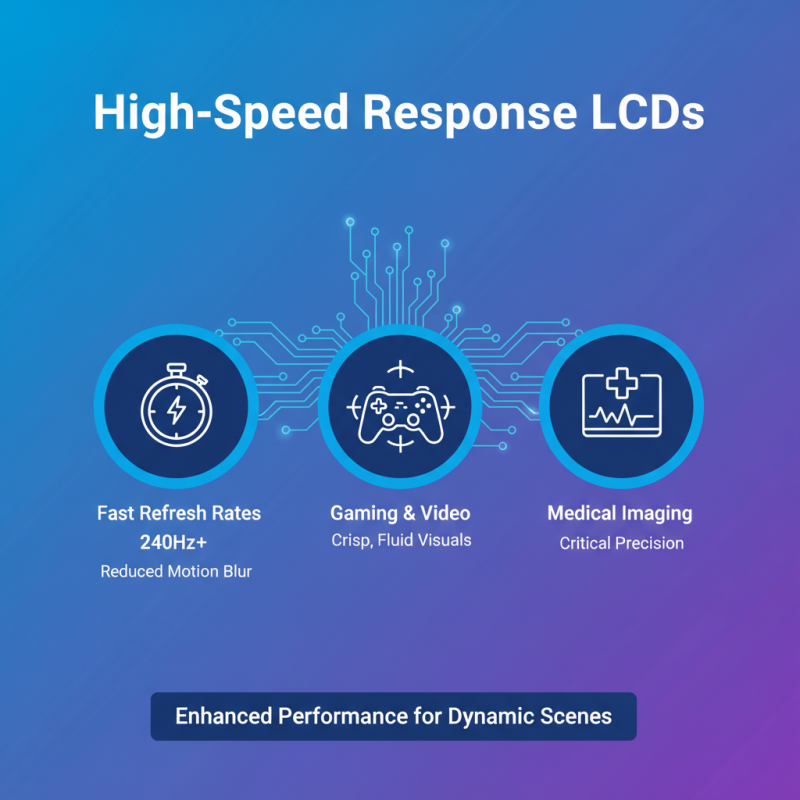
High-speed response LCDs have emerged as groundbreaking displays, essential for various applications. These LCDs are designed to enhance performance where speed is crucial, such as gaming, medical imaging, and high-speed video content. One significant feature is their fast refresh rates, often exceeding 240Hz. This capability reduces motion blur, providing crisp visuals even in dynamic scenes.
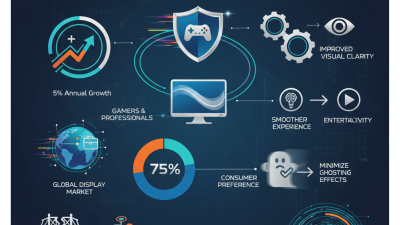
The rise of high-speed response LCDs is backed by market data. According to a report by MarketsandMarkets, the global LCD market is expected to reach $123 billion by 2028. Increasing demand for high-quality displays in sectors like entertainment and healthcare contributes to this growth. The benefits of these displays include improved response time and color accuracy, making them preferred choices for professionals and enthusiasts alike.
Tips for choosing high-speed response LCDs include checking refresh rates and response times. A response time of 1 ms or less is ideal for competitive gaming. Additionally, consider the panel type, as some technologies provide better viewing angles and color reproduction. Remember, too much speed without quality can lead to a lackluster viewing experience. Balancing speed and accuracy is essential for optimal performance.
Technological Advancements in High-Speed LCD Manufacturing Processes
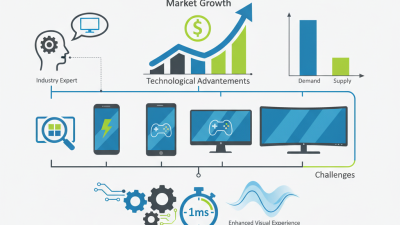
High-speed response LCDs are revolutionizing display technology. Recent advancements in manufacturing processes enhance their performance significantly. According to a market report by Mordor Intelligence, the global LCD market is expected to grow at a CAGR of 6.1% from 2023 to 2028. This surge reflects innovations in high-speed response capabilities, essential for industries like gaming and medical imaging.
The manufacturing of these LCDs employs novel techniques, such as advanced liquid crystal alignment and backlight optimization. These processes reduce response times to less than 1 millisecond. Such speeds enable smoother visuals and enhanced user experiences. However, challenges remain in achieving uniform performance across large displays. The fine balance between speed and image quality is a complex task for manufacturers.
Moreover, as production ramps up, quality control becomes increasingly crucial. Minor defects can lead to significant display issues. Reports indicate that achieving the highest production standards is still a work in progress. Companies are investing heavily in R&D to tackle these hurdles, aiming for reliable and consistent displays. The future of high-speed response LCDs looks promising, but industry players must navigate these challenges carefully.
High-Speed Response LCDs: Performance Comparison
This chart compares the performance metrics of High-Speed Response LCDs against Standard LCDs. The high-speed LCDs demonstrate significant advantages in response time, refresh rate, color accuracy, and brightness, showcasing their technological advancements and benefits for various applications.
Comparative Analysis: High-Speed Response LCDs vs. Traditional LCDs
High-speed response LCDs represent a significant advancement over traditional LCDs. One key difference is their refresh rate. High-speed models can refresh images more quickly, reducing motion blur. This is crucial for fast-paced applications like gaming and video, allowing users to experience smoother visuals.
Contrast is another important factor. High-speed response LCDs typically have better contrast ratios. This results in more vivid colors and deeper blacks. Traditional LCDs may wash out under certain lighting conditions, which can distract viewers in fast-moving scenes. The superior speed and contrast of high-speed models provide a more engaging experience.
However, these advantages come at a cost. High-speed response LCDs can be pricier due to their advanced technology. This leads some users to stick with traditional options. While traditional models are reliable, they may not meet the needs of everyone. As technology advances, a balance between cost and quality must be considered. This raises questions about what users value—a budget-friendly option or cutting-edge performance.
Benefits of High-Speed Response LCDs in Various Industries
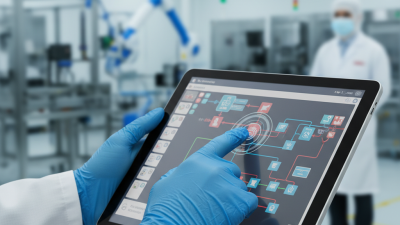
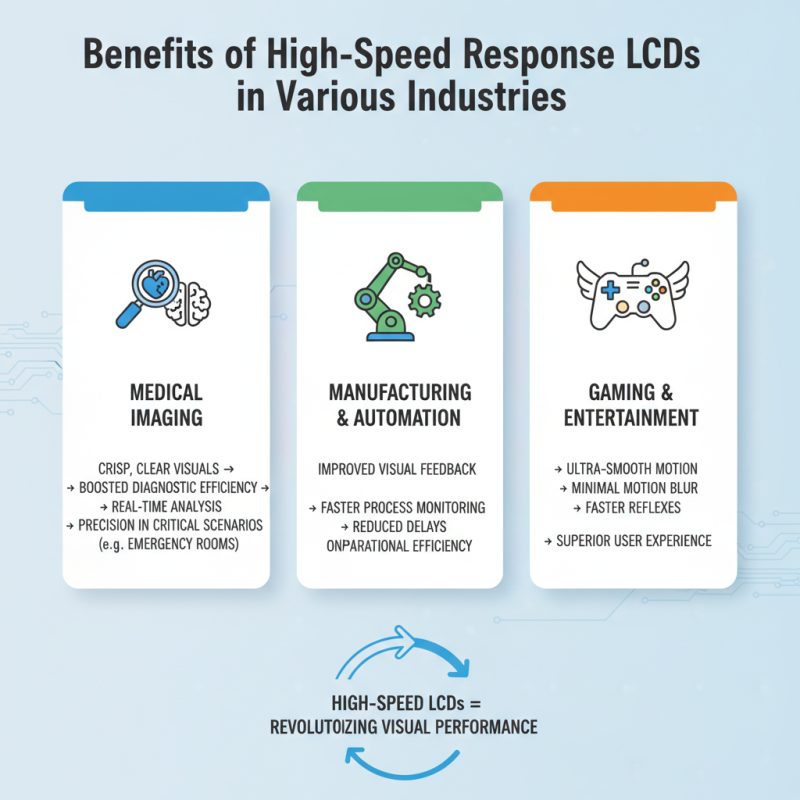
High-speed response LCDs are revolutionizing various industries by enhancing visual performance and responsiveness. In medical imaging, these displays provide crisp, clear visuals that boost diagnosis efficiency. Doctors can analyze images in real-time, ensuring precision in critical scenarios. This technology is particularly vital in emergency rooms, where every second counts.
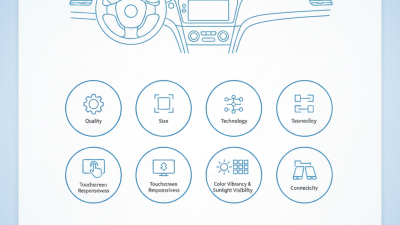
In the automotive sector, high-speed response LCDs improve dashboard displays and infotainment systems. Drivers benefit from smoother graphics and faster updates. Visual feedback becomes crucial when navigating or accessing information on the go. Clarity in high-speed environments can greatly enhance safety and user experience.
Challenges do persist, however. Not all applications fully utilize these advanced displays. Some industries may overlook the importance of quick response times in their equipment. As professionals in these fields continue to adapt, the potential benefits of high-speed response LCDs remain significant. Exploring these advancements can lead to improved outcomes across various sectors.
Market Trends and Future Projections for High-Speed Response LCD Technology
High-speed response LCD technology is making waves in various sectors. With rapid advancements, this type of display offers quicker refresh rates and improved image quality. Market trends indicate a growing demand in fields such as gaming, medicine, and automotive industries. These sectors require real-time data and sharp visuals, leading to a significant increase in high-speed LCD applications.
Future projections suggest that the adoption of high-speed response LCDs will soar. Analysts predict broader usage in augmented reality and virtual reality platforms. They are designed for immersive experiences, where traditional displays fall short. However, challenges remain. The cost of production and the need for specialized skills can hinder widespread implementation. This must be addressed for the technology to thrive.
Tips: Consider potential areas where your projects could benefit from faster displays. Taking small steps can lead to substantial improvements. Ensure your team is educated about the latest advancements. Adopting these technologies may require a shift in mindset and ongoing education. Embracing change is key to leveraging high-speed response LCDs effectively.
What are High-Speed Response LCDs and Their Benefits? - Market Trends and Future Projections for High-Speed Response LCD Technology
| Dimension |
Description |
Current Value |
Projected Growth (2025) |
| Response Time |
Speed at which the LCD pixels can change from one state to another. |
1 ms |
50% reduction in response time |
| Market Demand |
Growing need for faster displays in gaming and professional applications. |
$1.5 billion |
$3 billion |
| Energy Efficiency |
Power consumption per panel for high-speed response LCDs. |
25 W |
20% decrease in power consumption |
| Resolution Support |
Maximum resolution supported by high-speed response LCDs. |
3840 x 2160 (4K) |
8K resolution support by 2025 |
| Market Growth Rate |
Annual growth rate for the high-speed LCD market. |
15% |
25% by 2025 |

 +86-13662287276