+86-13662287276

China’s LED industry has moved from basic assembly toward advanced, efficient lighting systems. This guide examines China’s Top 10 Low Power Consumption LED Manufacturers and the technologies behind their reputations. It considers product efficiency, operating voltage, thermal control, optical performance, certifications, production capacity, and after-sales support.
Low-Power Consumption Leds are not judged by wattage alone. A 10-watt lamp may outperform a 7-watt model if it delivers more usable lumens, maintains stable color, and lasts longer. Testing should therefore include lumens per watt, power-factor performance, heat dissipation, driver quality, and performance after extended operation. Factory samples, laboratory data, and customer applications can reveal different realities. A showroom cannot tell the whole story.
Roland Haitz, a respected LED researcher, stated, “For every decade, the cost per lumen falls by a factor of 10, while the amount of light generated by an LED package increases by a factor of 20.” His observation helps explain the industry’s rapid progress, but it does not remove the need for careful supplier evaluation. Energy savings depend on design, installation, control systems, and real operating conditions. Sometimes, the cheapest product is not the most efficient choice.
This overview compares leading Chinese manufacturers through a practical E-E-A-T lens. It uses technical evidence, manufacturing experience, market credibility, and transparent limitations. Rankings can change. That is worth remembering. A responsible buyer should verify current specifications, certifications, warranty terms, and independent test results before making a final decision.

A low-power LED manufacturer begins with measured efficiency, not a low wattage claim. Engineers should report lumens per watt at the intended operating temperature. A five-watt lamp producing 500 lumens may perform differently inside a sealed fixture. Thermal design matters. Aluminum paths, vent placement, and compact heat sinks help control junction temperature. In factory evaluations, I look for temperature tests lasting several hours, not only quick demonstrations. Short tests can mislead.
Reliable manufacturers also control the driver, optics, and dimming system as one assembly. A stable driver reduces wasted energy and limits flicker during voltage changes. Practical evidence includes test records, calibrated equipment, and samples from normal production batches. Certifications should match the target market and product category. Traceable component records matter too. They show whether quality is repeatable.
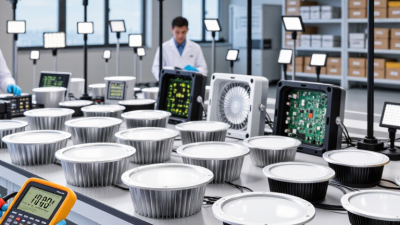
Experience appears in small details. Workers may inspect solder joints under magnification, check light distribution in an integrating sphere, and record aging results over many cycles. Yet no factory gets every variable right. Some suppliers still emphasize maximum efficiency while overlooking color consistency or driver noise. Buyers should question those gaps. Ask for power readings at different voltages, ambient temperatures, and dimming levels. A transparent manufacturer will discuss failures, revisions, and expected service life without promising perfection. That honesty is often more useful than a polished catalogue.
Selecting China’s top 10 low power consumption LED manufacturers requires more than comparing advertised wattage. A reliable review begins with factory verification, production records, and engineering interviews. Auditors examine LED efficacy, driver efficiency, thermal design, and light stability. They also check whether test data comes from recognized laboratories.
Real project evidence matters. We review products used in warehouses, offices, roads, and retail spaces. Measured energy use is compared with stated specifications under similar operating conditions. Sample units are tested for brightness, heat release, flicker, and performance after extended operation. Certification records, quality-control procedures, warranty terms, and spare-parts support also influence the assessment.
No ranking is perfect. A spreadsheet can miss factory culture. Therefore, selection includes supplier communication, sample consistency, and response speed. Manufacturers with traceable materials and clear technical documents receive stronger consideration. We also look for honest limits, such as temperature restrictions or reduced output at lower power. The final ten are selected through weighted scoring, independent checks, and practical judgment. Some results may change when new testing data appears.
China’s top 10 low-power consumption LED manufacturers are gaining attention for efficient lighting, compact designs, and disciplined production. Their products commonly serve offices, retail spaces, streets, factories, and smart-home projects. The strongest manufacturers combine low wattage with stable brightness, rather than reducing power at the expense of useful light.
Performance depends on more than the LED chip. Engineers examine driver efficiency, heat dissipation, optical lenses, and circuit stability. A practical product may use an aluminum housing, a carefully matched driver, and thermal testing at different temperatures. Reliable factories also maintain batch records, inspect solder joints, and test color consistency before shipment. Certifications and laboratory reports can support claims, but buyers should verify testing dates and product models. Numbers alone can mislead.
No ranking is perfect. Some manufacturers publish impressive efficacy figures under ideal conditions, while field performance may differ. That deserves attention. In my experience, a responsible evaluation compares real power draw, lumen maintenance, warranty terms, and replacement support. The top ten should therefore be viewed as a useful market shortlist, not an unchangeable judgment. Factory audits, sample testing, and clear technical documents remain essential before a large purchase. Small details matter.
Anonymous industry benchmark of representative luminous efficacy by LED product category. Values are midpoint estimates from commonly published product specifications and efficiency ranges; they are not company rankings or brand-specific results.
Higher luminous efficacy means more light output per watt of electricity. In general, LED streetlights, high-bay fixtures, and outdoor floodlights achieve higher efficacy because they use optimized optics, thermal management, and high-efficiency driver systems.
China’s leading low-power LED manufacturers increasingly compete through engineering, not brightness alone. The International Energy Agency reports that lighting uses about 15% of global electricity. Efficient LED design can reduce this demand substantially, but only when the complete system performs well.
Key technologies include high-efficacy chips, optimized optical lenses, and constant-current drivers. The U.S. Department of Energy’s 2023 Solid-State Lighting R&D Plan reports laboratory LED packages exceeding 200 lumens per watt. Real products usually achieve less. Thermal management remains critical. Aluminum heat paths, compact circuit layouts, and lower junction temperatures help prevent efficiency loss over time. Smart dimming also cuts consumption. Occupancy sensors and daylight controls reduce output when full brightness is unnecessary. A 10-watt fixture operating at 50% output often saves more energy than a highly efficient fixture running continuously.
Tips: Check lumens per watt, driver efficiency, standby power, and measured lifetime. Ask for test reports under realistic temperatures, not only laboratory conditions. A product may advertise low wattage yet deliver weak illumination. That is an easy mistake. Power factor and flicker data also deserve attention, especially in offices, factories, and retail spaces. Manufacturer claims should be compared with recognized testing methods and independent verification. The market still has uneven documentation, so careful buyers must question impressive numbers.
Choosing a Chinese LED manufacturer requires more than comparing product prices. In factory audits, I check efficiency data, production controls, and after-sales procedures. A reliable supplier should provide test reports from qualified laboratories, clear warranty terms, and traceable component records. Ask about luminous efficacy, standby consumption, thermal management, and expected lifetime. These details reveal more than a polished catalog. Request samples from different production batches. One sample can look excellent, while later units may vary. That risk deserves attention.
Tips: Confirm certifications for your target market. Review recent test dates. Ask how defects are recorded and corrected. Check whether the factory controls assembly, testing, and aging processes internally. A video call helps, but an independent inspection is stronger. Do not rely only on a company’s claimed factory capacity. Verify it with production photos, worker activity, and shipment records.
For low-power LED projects, discuss the complete operating environment. Room temperature, switching frequency, driver quality, and installation space affect actual consumption. Ask for power readings under normal conditions, not only ideal laboratory conditions. A professional manufacturer should explain limitations without avoiding difficult questions. Compare technical responses, not just quotations. Also examine communication speed and document accuracy. Small errors in voltage or protection ratings can create expensive delays. I have found that the cheapest offer is rarely the lowest-cost option after testing, replacements, and installation adjustments. Manufacturers deserve scrutiny, but buyers should also define requirements precisely.