2026 Best LED Backlit LCD Modules for Global Buyers?
As the demand for high-quality displays grows, the market for LED backlit LCD modules continues to expand. According to a report by MarketsandMarkets, the LED backlighting market is expected to reach $52 billion by 2026, driven by rising applications in sectors like automotive, consumer electronics, and healthcare. J.S. Lin, a noted industry expert, remarked, "The continuous innovation in LED backlit LCD modules is set to redefine visual experiences across various platforms."
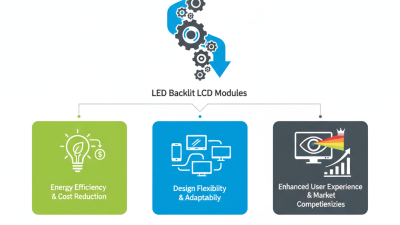
In recent years, LED backlit LCD modules have transformed how we interact with technology. These modules offer enhanced brightness, energy efficiency, and improved color accuracy. As competition heightens, manufacturers face the challenge of balancing performance with cost. Every product on the market has its strengths and weaknesses, which warrants a careful selection process. Potential buyers must reflect on their specific needs.
Despite advancements, not all LED backlit LCD modules meet high expectations. Some users report issues such as uneven lighting or slow response times. Buyers must seek reliable options while doubting seemingly perfect products. Exploring product reviews and expert opinions can provide valuable insights. Awareness and research are needed to make informed decisions in this evolving market.

2026 LED Backlit LCD Modules Market Overview and Trends
The LED backlit LCD modules market is witnessing substantial growth as of 2026. Industry reports project a compound annual growth rate (CAGR) of 7.3% from 2022 to 2026. This reflects an increasing demand in various sectors such as consumer electronics, automotive, and medical applications. Globally, the shift towards energy-efficient solutions is driving this trend, with LED backlighting consuming approximately 30% less energy compared to traditional backlighting technologies.
Emerging regions, particularly in Asia-Pacific, show remarkable growth potential. Analysts indicate that production and innovation are concentrated in countries with strong manufacturing bases. However, challenges remain. Competition among manufacturers can lead to price wars, impacting profitability. Additionally, maintaining quality while scaling up production is a concern many companies face. Demand for higher resolution and slimmer designs also pushes manufacturers to innovate continually.
Sustainability is becoming a key focus in the industry. Many buyers now prefer modules that comply with environmental standards. Reports indicate that around 52% of buyers consider eco-friendliness a crucial factor in their purchasing decisions. As the market evolves, balancing innovation, cost, and sustainability will be vital for success. Addressing these challenges will require industry stakeholders to be adaptable and forward-thinking.
Key Specifications and Features of Top LED Backlit LCD Modules
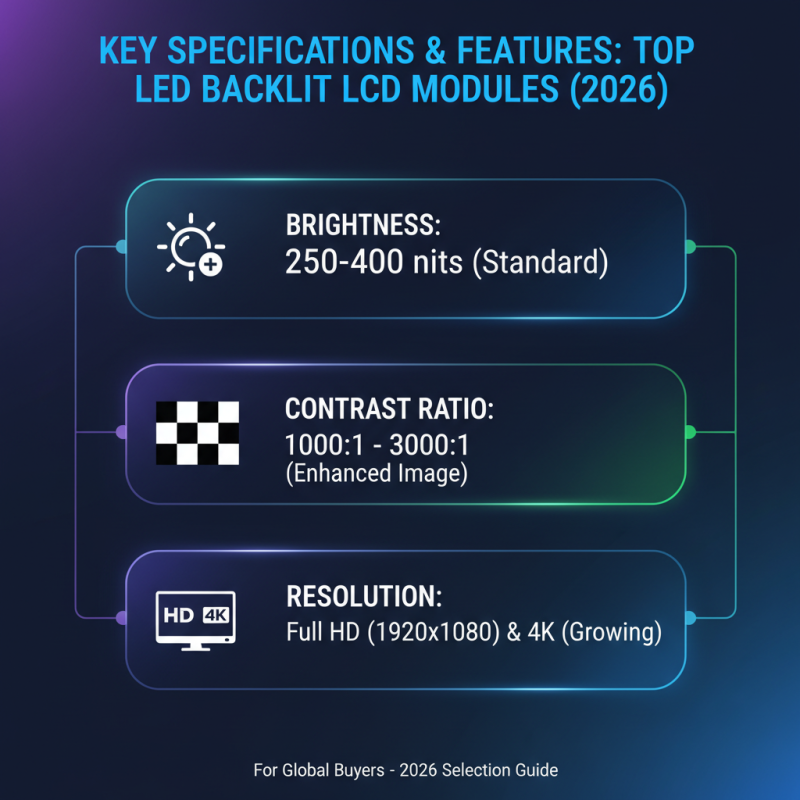
When selecting the best LED backlit LCD modules for 2026, various specifications and features become crucial for global buyers. Brightness is a vital aspect; most modules offer 250 to 400 nits. This range ensures clarity in different lighting conditions. A higher contrast ratio enhances image quality. Buyers should look for ratios between 1000:1 and 3000:1. Additionally, resolution is important. Full HD (1920x1080) remains standard but 4K options are increasingly popular.
Color accuracy is another key factor. Modules should support wide color gamuts, ideally over 90% of sRGB. This ensures vibrant and accurate color reproduction. Furthermore, power consumption rates are crucial for environmental sustainability. Energy-efficient modules may draw less than 30 watts. This not only reduces costs but also aligns with eco-friendly practices.
Buyers may encounter some challenges. Many modules vary in compatibility and performance. It is essential to verify that a module meets specific project requirements. Not all manufacturers provide reliable documentation. Therefore, careful research is necessary. Inconsistent quality among suppliers can lead to issues down the line. Engage with trusted sources to minimize risks during the selection process.
Comparative Analysis of Leading Brands in LED Backlit LCD Technology
The market for LED backlit LCD modules continues to thrive as technology advances. A report by a leading industry analyst highlights that the global market size for LED backlit technology is projected to reach USD 74 billion by 2026. This growth indicates increasing demand across various sectors, including consumer electronics, automotive displays, and healthcare.
When analyzing different LED backlit LCD brands, factors such as brightness, color accuracy, and energy efficiency play vital roles. The latest studies show that high-end models offer brightness levels exceeding 1,200 nits, which is essential for outdoor visibility. However, some models struggle with uniformity in color production, leading to potential consumer dissatisfaction. Additionally, energy consumption remains a critical issue, as some brands consume up to 25% more power than their counterparts, thereby impacting sustainability efforts in the industry.
As manufacturers compete, innovation is key. Many are focusing on improving color gamut and response times. A recent survey found that consumers prioritize energy savings and display quality. Despite advancements, inconsistencies in product lifespans still pose challenges. Addressing these issues will be crucial for brands aiming to lead in this dynamic market.
2026 Best LED Backlit LCD Modules for Global Buyers
| Specification |
Feature 1 |
Feature 2 |
Feature 3 |
Price (USD) |
| Size (Inches) |
16 |
24 |
32 |
450 |
| Resolution |
1920x1080 |
1920x1080 |
3840x2160 |
600 |
| Brightness (cd/m²) |
250 |
300 |
400 |
750 |
| Color Gamut (%) |
95 |
100 |
98 |
90 |
| Response Time (ms) |
5 |
4 |
2 |
3 |
Consumer Preferences and Buying Behavior for LCD Modules in 2026
In 2026, consumer preferences for LCD modules are evolving. A report from Market Research Future predicts that the global LCD module market will grow at a CAGR of 6.3% through 2026. This growth reflects a shift towards sleek designs and enhanced performance. Consumers now prioritize energy efficiency and high brightness levels.
Recent studies indicate that 72% of buyers prefer LED backlighting for their vivid color reproduction and lower energy consumption. Many are concerned about sustainability. As a result, eco-friendly modules are increasingly in demand. Reports suggest that buyers are willing to pay a premium for products that meet these standards.
Despite these trends, there are areas for improvement. Some consumers find available options overwhelming. The sheer variety can lead to decision fatigue. Additionally, many modules lack compatibility across devices, causing frustration. Thus, manufacturers face the challenge of addressing these consumer pain points while enhancing product offerings.
Future Innovations and Developments in LED Backlit LCD Module Design
The LED backlit LCD module industry is witnessing significant advancements. Innovations in design are focused on improving energy efficiency and visual performance. According to a recent market report, the global LED backlit LCD market is projected to grow by 7% annually until 2026. This growth is driven by increasing demand in sectors such as consumer electronics and automotive displays.
Future developments emphasize miniaturization and enhanced display quality. New technologies like MicroLED and quantum dot enhancements are being integrated. These advancements allow for more vibrant colors and better contrast ratios. However, achieving the perfect balance between cost and technology remains a challenge. Many manufacturers report struggles with production efficiency and supply chain reliability, leading to potential delays.
Additionally, sustainability is becoming a key consideration. The industry is exploring eco-friendly materials and processes to reduce the environmental impact. Nevertheless, the transition to sustainable practices can be slow. Companies must invest heavily in research and development. The aim is to create modules that are not only efficient but also environmentally responsible. Balancing innovation with these concerns is critical for future success.

 +86-13662287276