+86-13662287276

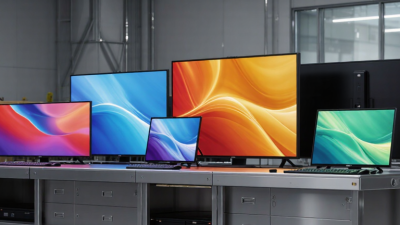
China has become a major sourcing hub for Led Backlit Lcd Modules, serving retail displays, industrial panels, medical equipment, and automotive interfaces. The country’s supplier base includes large manufacturers, specialized module producers, and flexible contract factories.
This guide examines ten notable Chinese suppliers through practical purchasing criteria. These criteria include display brightness, viewing angle, backlight uniformity, touch compatibility, customization ability, production capacity, and quality-control systems. Certifications, sample performance, lead times, and export experience also matter. A bright screen is not enough. It must remain readable under real lighting conditions.
Supplier claims require careful verification. Product pages may show impressive specifications, yet actual results can change with temperature, batch quality, or enclosure design. Buyers should request datasheets, inspection reports, aging-test details, and physical samples before placing large orders. Small details matter, such as connector placement, screw-hole accuracy, cable length, and visible edge leakage.
Not every supplier fits every project. Some excel at standard sizes, while others handle low-volume customization better. Pricing can also hide tooling costs, packaging risks, or after-sales limitations. This ranking should therefore be viewed as a practical starting point, not an absolute judgment. My assessment may miss newer factories or regional specialists. That limitation deserves attention.
The selected companies are considered for their technical experience, manufacturing transparency, product consistency, and communication quality. The goal is simple: help engineers, importers, and purchasing teams compare options with clearer expectations and fewer costly surprises. Reliable evidence beats attractive promises.
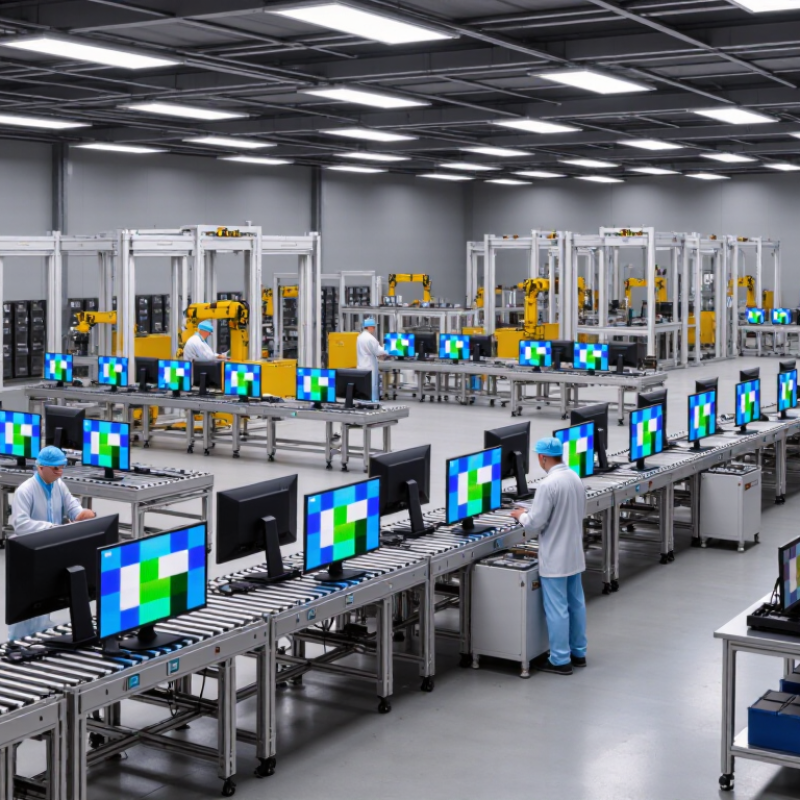
An LED backlit LCD module is a display assembly that combines an LCD panel with an LED illumination system. The LCD layer controls each pixel but produces no light itself. Light is the message. Behind the panel, LEDs send light through a reflector, light guide plate, diffuser, and optical films. These parts spread illumination across the viewing area. The driver circuit controls current, brightness, and sometimes dimming performance. Edge-lit designs save thickness, while direct-lit designs can provide stronger and more even illumination.
In industrial equipment, vehicles, medical instruments, and consumer devices, the module affects readability, power use, heat, and product size. A reliable supplier should provide measured luminance, contrast, viewing angles, color consistency, and operating temperature data. Engineers should also check LED lifetime, connector quality, driver stability, and sample-to-sample uniformity. A brighter panel is not always better. It may create more heat and shorten component life.
Yet specifications can mislead. Practical testing under sunlight, vibration, and long operating hours reveals weaknesses that laboratory figures may hide. Small issues matter, such as a visible bright spot near the edge or a connector that loosens after repeated assembly. Careful suppliers explain these limitations instead of presenting perfect numbers.
China Top 10 LED Backlit LCD Module Suppliers
Key Criteria for Ranking China’s Top Suppliers
Ranking leading Chinese LED backlit LCD module suppliers requires more than comparing prices or catalog sizes. I assess production experience, engineering depth, and delivery history. A supplier should explain its LED arrangement, diffuser design, luminance range, and connector options clearly. Vague specifications create expensive problems later.
Samples reveal reality. I request identical modules from several production batches, then measure brightness uniformity, color temperature, viewing angle, and power consumption. A practical test may include a 500-hour aging run at elevated temperature. Thermal behavior matters, especially inside narrow industrial enclosures. Engineers should also review the light guide, adhesive layers, and frame tolerances. Small gaps can produce visible bright spots.
Quality evidence must be traceable. Strong suppliers provide inspection records, material declarations, process controls, and applicable compliance documentation. Certifications help, but they do not replace factory verification. I look for incoming-material checks, automated optical inspection, and documented corrective actions. Responsive technical support is equally important when drawings change or a sample fails.
My ranking also considers realistic lead times, tooling transparency, packaging protection, and spare-part continuity. A low quotation can hide weak testing or unstable components. That judgment is not perfect. Communication quality can also vary between sales teams and engineers. Therefore, I compare written answers with factory observations, measured samples, and customer-use feedback before assigning a position.
Anonymized benchmarking table based on commonly disclosed capabilities in China’s LED-backlit LCD module manufacturing sector. Figures shown as practical market ranges rather than company-specific claims.
| Rank | Anonymous Supplier Profile | Primary Module Focus | Typical Size Range | Common Resolution Range | Interface Options | Backlight Configuration | Customization Capability | Quality & Compliance Evidence | Typical Development Lead Time | Typical Production Lead Time | Indicative MOQ | Weighted Score |
|---|---|---|---|---|---|---|---|---|---|---|---|---|
| 1 | Supplier Profile 01 | Industrial HMIEmbedded Displays | 7.0–15.6 in | 800 × 480 to 1920 × 1080 | RGB, LVDS, MIPI DSI | Edge-lit and direct-lit LED; high-brightness options | Custom FPC, cover lens, touch panel, mounting structure and firmware integration | RoHS and REACH support; ISO 9001-type quality systems commonly available | 4–8 weeks | 5–8 weeks | 100–500 units | 92/100 |
| 2 | Supplier Profile 02 | Automotive-Style DisplaysControl Panels | 8.0–15.6 in | 1280 × 720 to 1920 × 1080 | LVDS, MIPI DSI, eDP | Wide-temperature LED backlight with brightness-control support | Optical bonding, anti-glare treatment, custom bezel and touch integration | RoHS, REACH and CE documentation; traceability programs subject to project scope | 6–10 weeks | 6–10 weeks | 200–1,000 units | 90/100 |
| 3 | Supplier Profile 03 | Medical EquipmentProfessional Displays | 10.1–21.5 in | 1280 × 800 to 1920 × 1080 | LVDS, eDP, MIPI DSI | Uniformity-optimized LED backlight; optional high-luminance design | Custom color calibration, touch, bonding and enclosure fitment | RoHS and REACH support; project-specific quality and validation records | 6–12 weeks | 6–10 weeks | 100–500 units | 89/100 |
| 4 | Supplier Profile 04 | POSRetail Terminals | 7.0–15.6 in | 1024 × 600 to 1920 × 1080 | RGB, LVDS, HDMI controller solutions | Standard edge-lit LED; adjustable brightness options | Custom housing interface, touch panel, cable assembly and logo-free front design | CE, RoHS and FCC-related documentation available by configuration | 3–6 weeks | 4–7 weeks | 100–300 units | 87/100 |
| 5 | Supplier Profile 05 | TransportationOutdoor Terminals | 7.0–12.3 in | 1024 × 600 to 1920 × 720 | LVDS, MIPI DSI, eDP | High-brightness LED; sunlight-readable and wide-temperature variants | Optical bonding, anti-reflective coating, waterproof front integration | RoHS and REACH support; environmental testing normally defined per project | 6–12 weeks | 6–10 weeks | 200–1,000 units | 86/100 |
| 6 | Supplier Profile 06 | Smart HomeIoT Control Panels | 4.3–10.1 in | 480 × 272 to 1280 × 800 | RGB, SPI, MIPI DSI | Low-power edge-lit LED with PWM brightness control | Custom touch, cover glass, FPC, connector and compact mechanical design | RoHS and REACH documentation commonly offered | 4–8 weeks | 4–8 weeks | 300–2,000 units | 84/100 |
| 7 | Supplier Profile 07 | Industrial InstrumentsTest Equipment | 3.5–12.1 in | 480 × 320 to 1280 × 800 | RGB, SPI, RGB serial, LVDS | Standard LED backlight; long-life and low-flicker configurations | Custom connector location, FPC length, bezel and anti-glare surface | RoHS and CE-related documentation subject to final assembly | 4–8 weeks | 5–8 weeks | 200–1,000 units | 82/100 |
| 8 | Supplier Profile 08 | Consumer ElectronicsPortable Devices | 3.5–10.1 in | 480 × 320 to 1920 × 1200 | SPI, MIPI DSI, RGB | Thin edge-lit LED with low-power drive options | Custom FPC, touch integration, cover lens and optical stack | RoHS and REACH support; certification depends on the finished product | 4–8 weeks | 5–9 weeks | 500–3,000 units | 81/100 |
| 9 | Supplier Profile 09 | Digital SignageCommercial Displays | 10.1–32.0 in | 1280 × 800 to 1920 × 1080 | LVDS, eDP, HDMI controller solutions | Direct-lit or edge-lit LED; high-luminance options | Custom metal frame, protective glass, touch panel and thermal design | CE, RoHS and FCC-related documentation available by project | 6–10 weeks | 6–10 weeks | 100–500 units | 79/100 |
| 10 | Supplier Profile 10 | General-Purpose LCD ModulesReplacement Displays | 2.8–15.6 in | 320 × 240 to 1920 × 1080 | SPI, RGB, LVDS, MIPI DSI | Standard LED backlight with selected high-brightness models | Moderate customization for FPC, connector, touch and mounting dimensions | RoHS and REACH support; quality documentation varies by product line | 3–7 weeks | 4–8 weeks | 100–1,000 units | 77/100 |
Ranking framework weights engineering capability, product coverage, customization depth, quality documentation, lead time, minimum order flexibility and suitability for industrial use. Interface availability, size range, lead time and MOQ can change according to the selected LCD panel, touch solution, backlight specification and final assembly requirements.
China’s leading LED backlit LCD module suppliers serve industrial, medical, automotive, consumer, and embedded applications. This profile reviews ten supplier types through practical purchasing criteria, rather than simple production claims. Their capabilities include custom display sizes, high-brightness panels, touch integration, wide-temperature operation, and small-batch engineering support.
Supplier One focuses on compact displays for handheld equipment.
Supplier Two develops sunlight-readable modules for outdoor instruments.
Supplier Three offers industrial panels with reinforced frames and long-term availability.
Supplier Four specializes in touch displays for control systems.
Supplier Five supports automotive-style interfaces and vibration testing.
Supplier Six provides medical-use modules with controlled color performance.
Supplier Seven handles custom cable layouts and connector changes.
Supplier Eight serves smart-home and commercial terminals.
Supplier Nine emphasizes rapid prototypes and engineering samples.
Supplier Ten combines standard modules with tailored backlight designs.
Factory experience matters here. Engineers should examine luminance uniformity, viewing angle, LED lifetime, thermal behavior, and interface stability. A bright screen may still perform poorly under heat. Ask for measured data, not attractive photographs. Review optical reports, sample history, inspection records, and replacement policies before approval.
No supplier leads every category. Some offer excellent customization but slower delivery. Others provide stable production but limited mechanical changes. Published specifications can also omit aging results or dark-room measurements. That is a weakness worth questioning. Buyers should test samples under real temperatures, mounting conditions, and operating hours before placing a large order.
China’s top ten LED backlit LCD module suppliers differ in panel formats, optical design, and customization depth. Omdia’s 2024 display forecast indicates that LCD still represents more than four-fifths of global flat-panel display area demand. That scale supports mature 16:9, square, bar-type, and sunlight-readable products.
Products vary from 1.8-inch instrument screens to large industrial modules. Standard edge-lit designs usually reduce cost and thickness. Direct-lit structures can improve brightness uniformity. Mini-LED backlighting adds finer dimming control, but it increases driver complexity and thermal demands. TrendForce reported strong double-digit growth in Mini-LED backlight shipments during 2024. The technology is promising. It is not automatically better.
Customization often includes FPC shape, connector position, touch integration, viewing angle, luminance, and operating temperature. For outdoor equipment, suppliers may specify 1,000 to 1,500 nits, optical bonding, and anti-glare glass. Automotive and medical applications require stricter validation, including vibration, humidity, and long-duration aging tests. IEC-based testing improves reliability, yet test reports alone cannot replace production audits. This is where comparisons become imperfect.
When evaluating ten suppliers, buyers should compare sample consistency, pixel-defect control, tooling ownership, minimum order quantity, and engineering response time. A lower quotation may conceal longer tooling cycles or limited firmware support. Ask for measured uniformity, not only a catalog value. Also check whether the quoted brightness is typical or merely the maximum.
The chart compares representative LCD module sizes commonly available from Chinese manufacturers. Values show typical peak brightness ranges for industrial, medical, automotive, and commercial applications. Actual specifications vary according to panel technology, backlight design, touch integration, interface, and operating-temperature requirements.
China’s top ten LED backlit LCD module suppliers should not be ranked by price alone. Supplier selection begins with the display’s real operating conditions. Define size, resolution, luminance, viewing angle, interface, lifetime, and temperature range before requesting quotations. Omdia’s display research continues to show LCD’s strong position in mainstream industrial and commercial applications, where supply stability matters as much as image quality. Ask each supplier for recent production capacity, monthly yield, component traceability, and documented quality controls.
Request samples from at least three qualified factories. Test them at minimum and maximum temperatures. Check brightness uniformity, dead pixels, connector strength, startup time, and backlight noise. TrendForce reports that display component pricing can shift with panel utilization and demand cycles, so a quotation should include validity dates and adjustment terms. Confirm whether the supplier manufactures the module or mainly integrates imported panels. The difference affects lead time, engineering support, and accountability.
Audit the factory, even through a qualified third party. Review ISO 9001 records, inspection plans, aging-test data, and corrective-action reports. Require a pilot order before mass production. A low quote may look attractive, yet unstable LED bins can create visible color differences across batches. This is often missed. Also compare packaging, spare-unit policy, tooling ownership, payment protection, and export documentation. According to Display Supply Chain Consultants, display procurement is increasingly influenced by application-specific customization, not only panel volume. Your scoring sheet should therefore weigh engineering response and change control heavily. A perfect supplier rarely exists; the best choice is the one whose weaknesses are visible, measurable, and manageable.