2026 How to Choose Low Power Consumption LEDs for Your Lighting Needs?
In today's world, the importance of energy efficiency cannot be overstated. Low-Power Consumption LEDs are becoming a key choice for sustainable lighting solutions. According to a recent report by the International Energy Agency (IEA), LED lighting can reduce energy usage by up to 70% compared to traditional incandescent bulbs.
Renowned lighting expert Dr. Emily Larson emphasizes the impact of Low-Power Consumption LEDs: "Adopting these technologies is essential for reducing our carbon footprint." The transition to LED technology is not seamless for all consumers. Many may feel overwhelmed by the variety of options available. Choosing the right LED for specific needs is critical.
While the lower energy bills are appealing, some may find LED lights too stark. Others might struggle with compatibility in older fixtures. It's vital to consider these aspects when making a selection. Balancing efficiency and personal preference is where challenges arise. Educating oneself about features like color temperature and lumen output can lead to more informed choices.
Choosing the Right LED: Understanding Power Consumption Ratings
When choosing low power consumption LEDs, understanding power consumption ratings is vital. Many consumers overlook this aspect. A report from the U.S. Department of Energy highlights that LED lighting can reduce energy costs by approximately 75% compared to traditional incandescent bulbs. This significant saving attracts many buyers.
Power consumption ratings are not uniform. Each LED bulb can have varying wattage and lumen output. For example, a 10-watt LED usually produces as much light as a 60-watt incandescent bulb. This disparity can confuse consumers, leading to inefficient purchases. Reviews suggest scrutinizing lumen per watt ratios. Higher ratios indicate better efficiency.
Not all LED lights last as long as claimed. Lifespan can vary significantly based on quality. Some LED lights might claim up to 25,000 hours but might fail early. Lack of proper testing can be an issue. Watch out for poor reviews and investment in reputable testing safety standards. Failure to consider these aspects could lead to frustration and wasted resources.
Evaluating Lumens per Watt: A Key Metric for Efficiency
Choosing low power consumption LEDs requires attention to several factors. Among these, lumens per watt (lm/W) stands out. This metric shows how efficiently a light source produces visible light. Higher lm/W values indicate better energy efficiency.
When evaluating LED options, consider both brightness and power usage. For instance, a bulb that offers 800 lumens with only 10 watts delivers an impressive 80 lm/W. This is excellent for reducing energy bills. Many people overlook lumens; they focus only on wattage. But wattage doesn't tell the whole story.
It's also wise to think about your unique lighting needs. Some spaces require bright light, while others benefit from softer options. Test different lights in your environment. Keep track of brightness levels and energy consumption. This experimentation helps you find the best fit. Remember, not all LEDs are created equal. You might discover that your chosen option isn’t as efficient as you thought.
Comparing Color Temperature Options in Low Power LEDs
When selecting low power consumption LEDs, understanding color temperature is crucial. Color temperature is measured in Kelvin (K). It influences the mood and functionality of a space. For instance, warm white light (2700K to 3000K) creates a cozy, inviting atmosphere. This is perfect for living rooms or bedrooms. On the other hand, cooler temperatures (4000K to 5000K) yield a more clinical feel. These are ideal for workspaces or kitchens.
Choose the temperature based on your needs. A mistake many make is limiting their options to a single type. A mix can provide balance. For example, using 3000K in relaxation areas and 4000K in task-oriented spots might enhance overall comfort. Sometimes, the perceived brightness can be misleading. Higher Kelvin doesn't always mean more light. This can lead to unsuitable choices if not carefully considered.
Experimenting with samples in your environment can help. It's essential to observe how different temperatures influence the space throughout the day. Shadows and reflections can alter how color temperature is experienced. Be vigilant in assessing real-world applications of your selections.
2026 How to Choose Low Power Consumption LEDs for Your Lighting Needs? - Comparing Color Temperature Options in Low Power LEDs
| Color Temperature (Kelvin) |
Typical Usage |
Brightness (Lumens) |
Power Consumption (Watts) |
Energy Efficiency (Lumens/Watt) |
| 2700K |
Warm White (Residential) |
800 |
12 |
66.67 |
| 3000K |
Soft White (Living Areas) |
800 |
12 |
66.67 |
| 4000K |
Cool White (Workspaces) |
800 |
12 |
66.67 |
| 5000K |
Daylight (Health Facilities) |
800 |
12 |
66.67 |
| 6500K |
Bright White (Retail) |
800 |
12 |
66.67 |
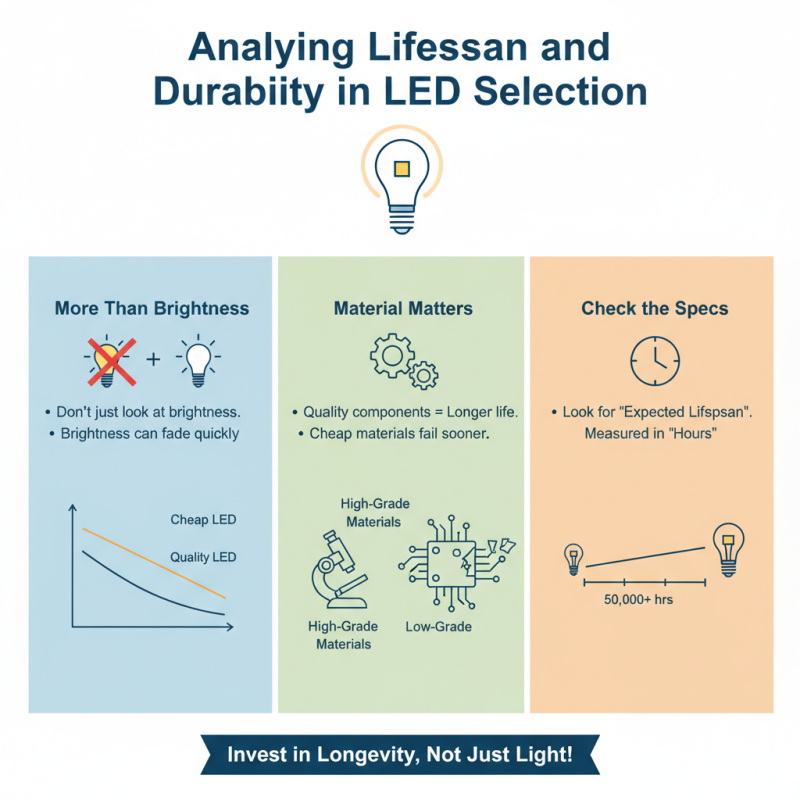
Analyzing Lifespan and Durability in LED Selection
When selecting low power consumption LEDs, lifespan and durability are crucial. Many people overlook these factors, focusing only on brightness. A LED might shine brightly but could dim quickly. Consider the quality of materials used. Some LEDs are made with cheaper components that fail sooner. Look for information on the expected lifespan, often measured in hours.
Durability matters too. LEDs should handle various conditions, from humidity to temperature fluctuations. A light that works well indoors may not perform outside. Check ratings for resistance to environmental factors. This can indicate how long the light will last. However, don't assume all products are equal. Some might claim high durability but underperform in real-world scenarios.
Lastly, reflect on your specific needs. If your lighting is in a high-traffic area, choose a more robust option. Energy efficiency should not sacrifice quality. Balancing these aspects can lead to a better lighting choice. Think beyond just the initial purchase; consider long-term value and reliability.
Assessing Total Cost of Ownership for Energy-Efficient Lighting
When assessing the total cost of ownership (TCO) for energy-efficient lighting, several factors need consideration. Data shows that LED lighting can reduce energy consumption by up to 80% compared to traditional bulbs. This significant savings often translates to a lower TCO. However, initial costs can be high. It’s crucial to calculate long-term savings rather than focusing only on upfront expenses.
Consider the lifespan of LEDs. They last up to 25,000 hours or more. Traditional bulbs might last only 1,000 hours. Over time, the replacement frequency for traditional bulbs increases costs and labor. Studies suggest that factoring in replacement costs can greatly affect your TCO analysis.
Moreover, not all LEDs are created equal. Quality varies greatly. Some lower-cost options might result in higher energy use over time due to inefficiencies. It’s important to weigh these differences. Sometimes, saving on initial costs can backfire, leading to more expenses later. Investing in quality is essential for true energy savings.

 +86-13662287276